|
|
|
||||||||
|
||||||||||
|
Current Information about the
|
||||||||||








|
||
|
|
You Don’t Know Where Your Going Until You Know Where You Have Been |
|
|
|
Hurricane Hugo Its hard for me to believe that it has be 29 years since Hugo arrived in Charlotte. I was in the tree maintenance business then and retired in 2007 after 42 years in the business of taking care of trees. Much more to be added to this page. Come back. Sept 27, 2018
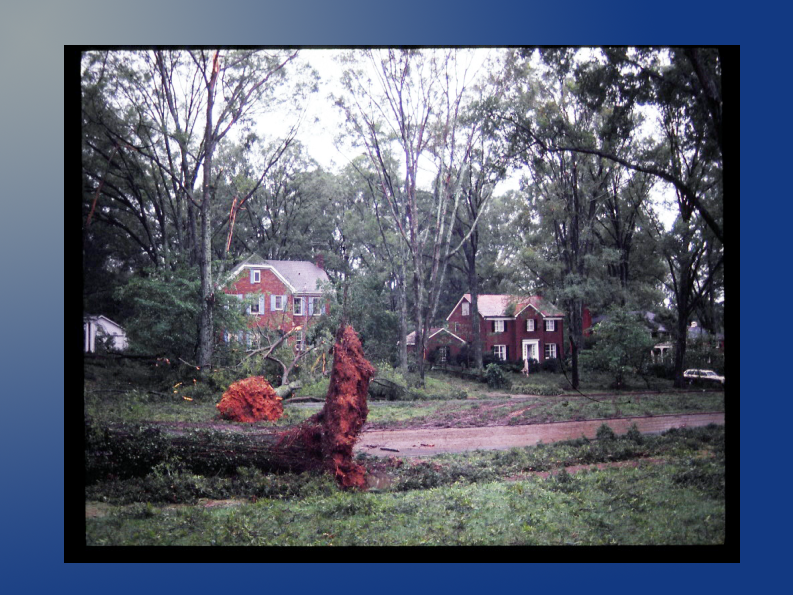
We woke up in the morning to this across the street.
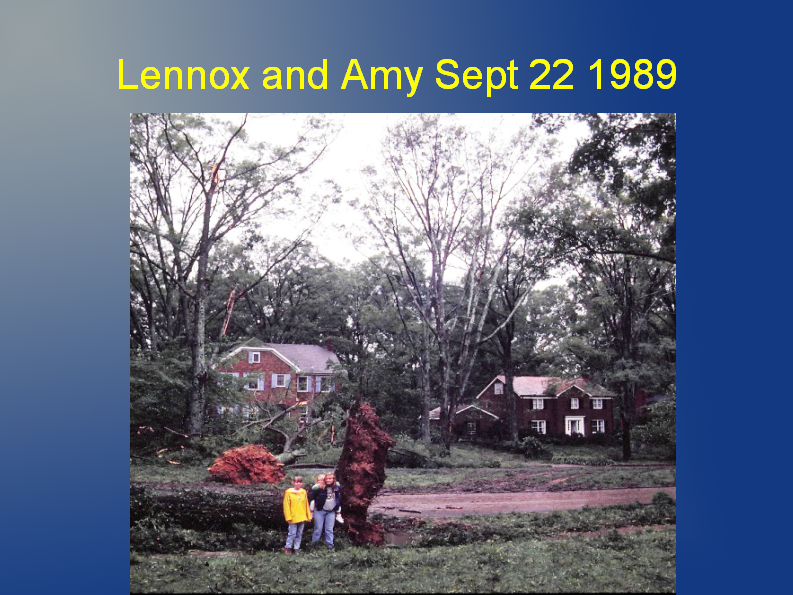
Lennox and across the street Amy explore the damage.
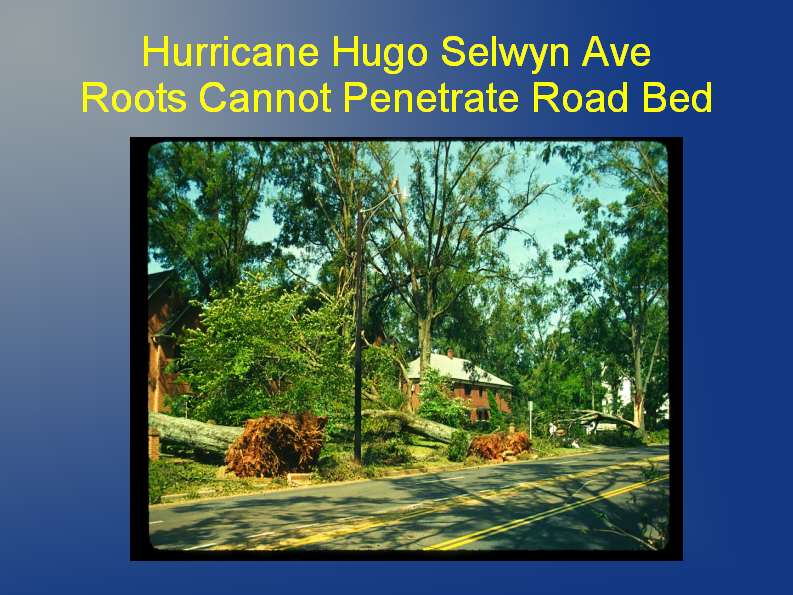
These trees on Selwyn and several others were blown down. There is little under the road bed to support root growth. There is little oxygen and heavy compacted clay soil. That means the roots butt up to the curb. Interestingly, the wind came from Hugo came from across Selwyn Ave. However, the trees across the street did not fall because the wind came from the functioning side of the roots.
The root system of many major trees (willow oaks being one species) go out at least as far as the drip zone and often much further. Compare the photos above to the drawing below provided by the Hillis Tree Consultants. There has to be enough root system to mechanically support the tree. Point being, most of the trees that fall in our part of the country are do to some type of root rot. See Inonotus
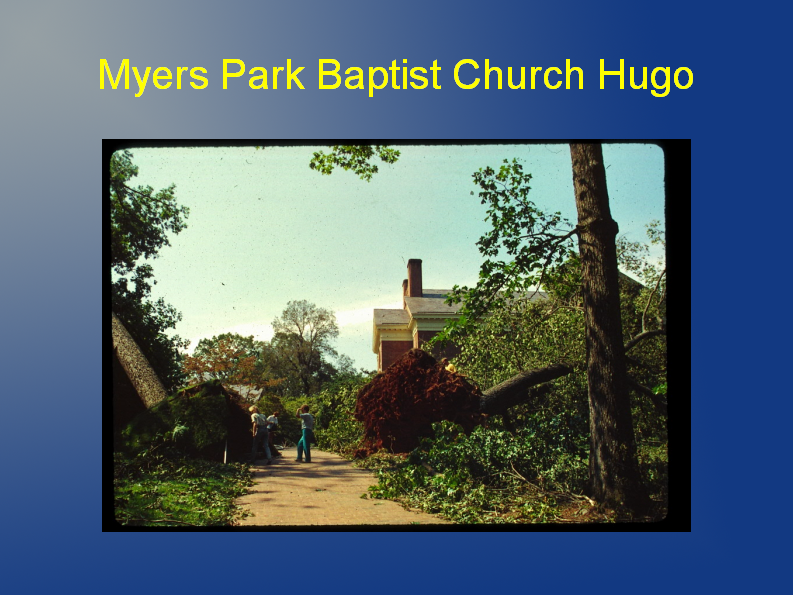
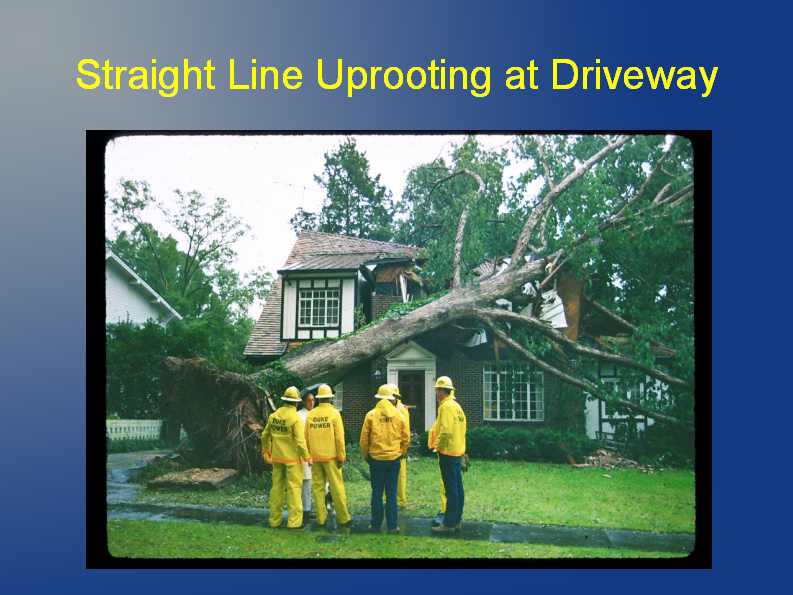
I coined a phrase and called this a Straight Line Uprooting. If you ever see this as these next four photos show, They uprooted on a very straight line that indicates something caused the cutting of the roots in a straight line....hence Straight Line Uprooting. See the drawing above that shows what the system might look like underground. Healthy trees often send roots out well past the Drip Zone or Drip Line. On large oaks this can be 30 feet or more past the Drip Zone
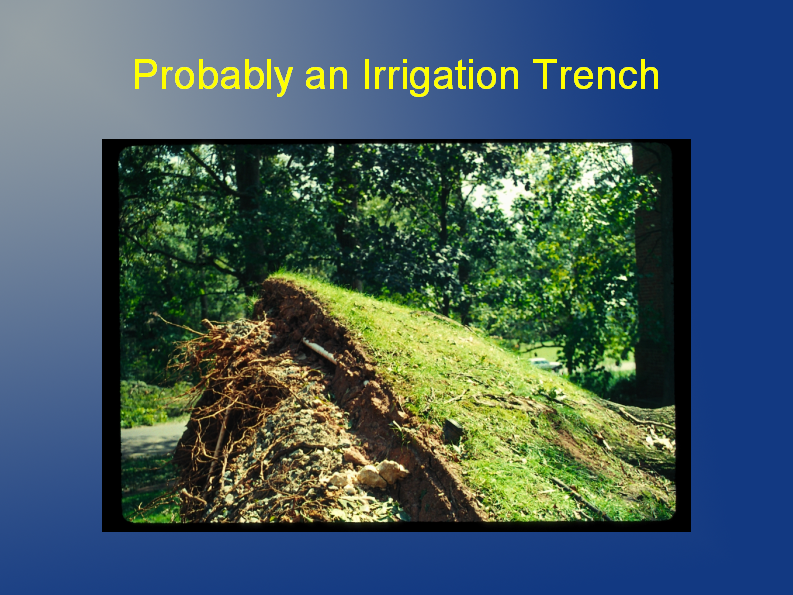
Below is an example of a Straight Line Uprooting. This was caused by the installation of the brick walkway and also the irrigation line that is shown in the next photo below.
The white PVC pipe is probably a PVC irrigation pipe or maybe an electrical sleeve.
Straight Line Uprooting of a White Oak. This home was destroyed and replaced.
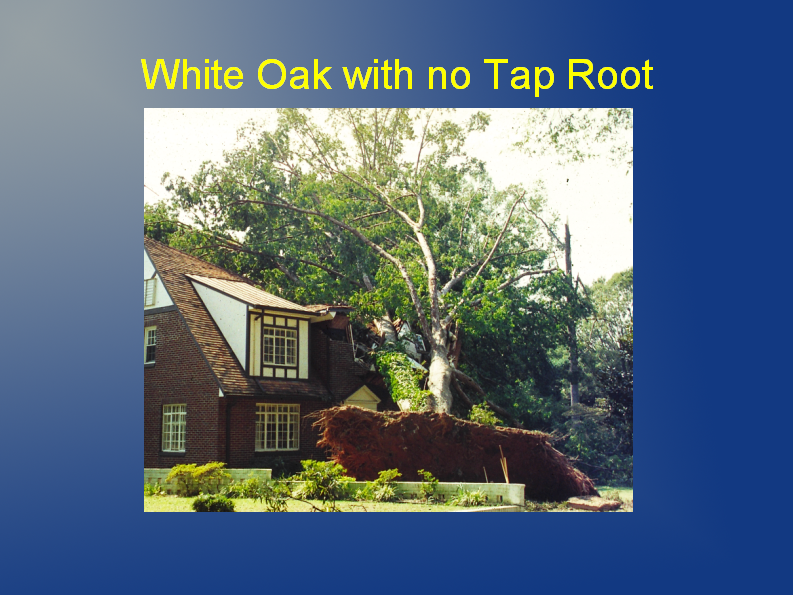
This is the same white oak from a different view. We are told that white oaks have a deep tap root, but in the right conditions like our heavy clay, they do not. Most viable roots that support a tree are in the first twelve to eighteen inches of soil. When acorn germinates it does send down a taproot which causes the plant to be difficult for the plant nursery folks to grow in pots and therefore White Oaks are generally not available in this area. Charlotte was loaded with White Oaks a hundred years ago and many years before that, but the have died or been removed for roads, homes, infrastructure etc.
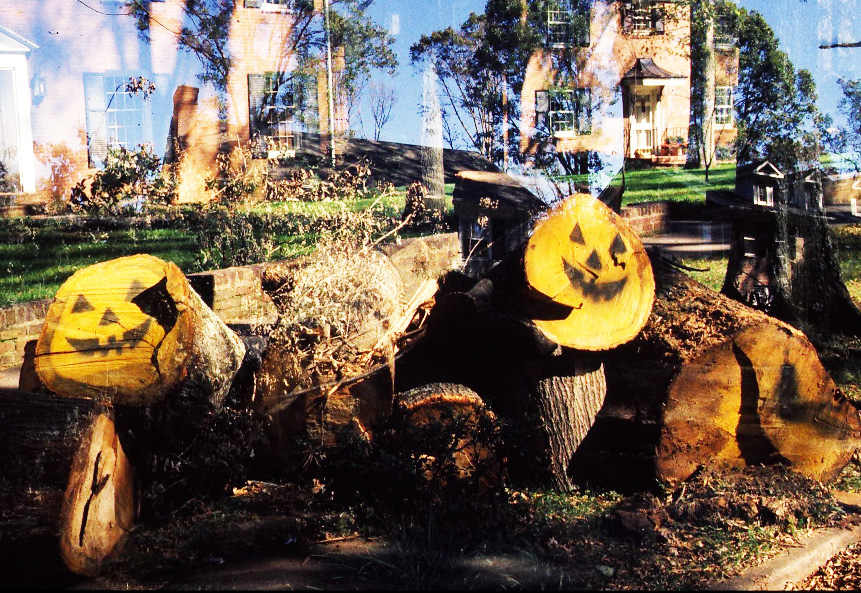
Photo below is of tree stumps left after Hurricane Hugo came through. Debris was on the streets for many months. The trees seen here were blown over in Hugo but were not cleared out until after Holloween of 1989. I think I took this from in side my car and the glare is the reflection in the window.
|